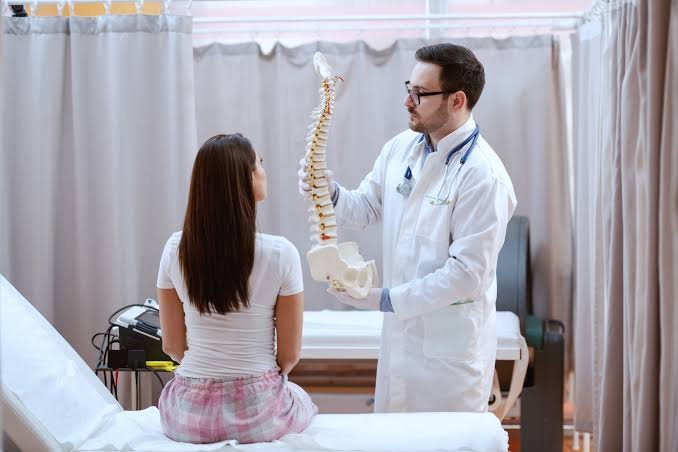
The spine does not send urgent warnings. It communicates slowly, through accumulating stiffness, gradually worsening morning discomfort, and small reductions in the range of movement that are easy to attribute to ageing rather than recognise as correctable mechanical changes. By the time most people pay serious attention to spinal health, the habits that could have prevented their current condition have been absent for years.
This is not a reason for fatalism. It is an argument for approaching spinal health the way we approach cardiovascular health or bone density: as something that responds meaningfully to consistent, appropriate habits maintained over time, rather than something that is either fine or suddenly problematic with nothing in between.
Movement is the Most Important Spinal Health Habit of All
The research on spinal health consistently points to one variable above all others: movement. The intervertebral discs that cushion and separate the vertebrae have no direct blood supply in adulthood. They depend entirely on the mechanical pumping action of movement and alternating loading and unloading to draw in nutrients and expel metabolic waste. A spine that moves regularly and variably has access to this exchange mechanism. A spine that is chronically still does not.
This does not mean high-intensity exercise is necessary or even ideal. What matters is variety and regularity of movement. Walking, swimming, cycling, and yoga all provide the kind of loading variation that keeps discs nourished and mobile. The specific activity matters less than the consistency and the avoidance of prolonged static postures that deprive the discs of the pressure changes they need.
Building Spinal Strength: The Core Muscles That Matter Most
When clinicians and researchers discuss core strength in the context of spinal health, they are primarily referring to a group of deep stabilising muscles that most exercise programmes largely ignore. The transversus abdominis, the multifidus, and the deep hip stabilisers work together to create the intra-abdominal pressure and segmental stabilisation that allow the spine to be loaded without placing excessive demand on the passive disc and joint structures.
These muscles are not trained effectively by standard abdominal crunches or plank variations alone. They respond to slow, controlled, precision exercises that emphasise activation and endurance rather than strength in the conventional sense. People with well-conditioned deep stabilisers place significantly less cumulative load on their spinal discs and joints through every hour of daily activity than those who rely primarily on their superficial musculature.
The Ergonomics Habits That Compound
Individual ergonomic adjustments seem trivially small when considered in isolation. Raising a monitor by three inches, setting a phone reminder to stand every hour, adjusting the lumbar support on a chair. But considered over the course of a working life, these small reductions in daily spinal loading add up to a substantial difference in cumulative mechanical stress on the discs and joints.
The monitor raised to eye level eliminates the daily cervical disc compression that accumulates across five or more years of forward-head screen work. The hourly movement break ensures the lumbar disc receives the loading variation it needs to stay nourished. These are not comfort adjustments. They are structural investments in the long-term integrity of the spinal tissues.
Hydration: The Underestimated Spinal Variable
The intervertebral disc’s nucleus pulposus is, in healthy adults, composed primarily of water. Its capacity to distribute compressive forces effectively, to maintain disc height, and to support the diffusion of nutrients depends directly on its hydration state. Chronic inadequate hydration, a condition that is extremely common in adults who spend most of their working hours at desks, measurably reduces disc height and functional integrity over time.
Adequate daily fluid intake is not a cure for disc degeneration, but it is a modifiable variable that affects the ongoing functional state of every disc in the spine. It requires no appointment, no equipment, and no recovery period.
When to Seek Professional Input
Spinal health habits built consistently over time reduce the probability of significant spinal problems and improve the response to treatment when problems do occur. But habits cannot reverse established structural changes. When early warning signals appear – morning stiffness that does not clear, recurring aching after specific activities, or the beginning of radiating symptoms – professional assessment at a clinic like ANSSI Wellness provides the structural clarity that determines whether the situation calls for modified habits, specific rehabilitation, or targeted clinical treatment.
Conclusion: The Spine Responds to Investment
The spine is neither fragile nor indestructible. It responds to the conditions it experiences: the movement it receives, the loads it bears, the muscular support available to it, and the nutritional environment its discs can access. Habits that consistently improve any of these variables produce a measurable and meaningful benefit across the decades. The best time to begin building them was twenty years ago. The second-best time is now.