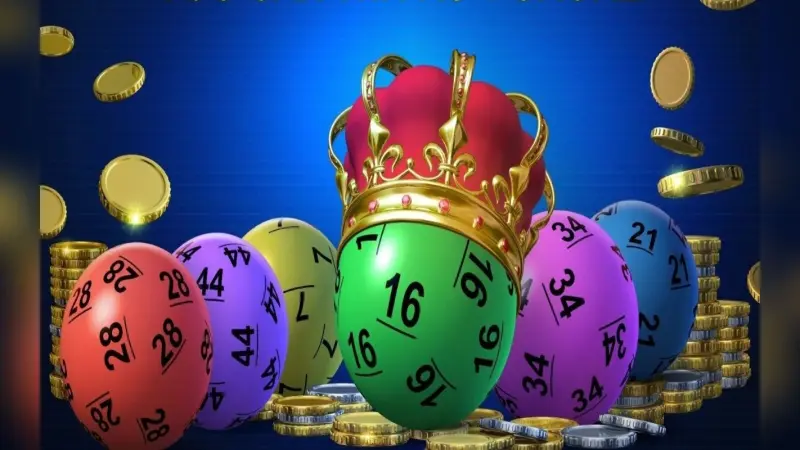
There’s something oddly fascinating about numbers. We use them every day without thinking much about them—phone numbers, birthdays, prices, dates. But in certain gambling cultures, numbers can take on a completely different meaning. They become symbols of hope, excitement, curiosity, and sometimes, unfortunately, financial trouble.
For generations, number-based gambling has attracted attention across different parts of India. What began largely through traditional, offline systems has gradually moved into the digital world. Today, a person can find result charts, discussions, historical records, and predictions online within seconds. That accessibility has made the subject even more visible, but it has also created plenty of confusion.
Understanding the culture around satta matka isn’t simply about knowing a few terms or checking numbers. It’s also about understanding where the practice came from, why people remain interested in it, and why supposedly easy opportunities to make money can be far more complicated than they appear.
From Traditional Markets to the Digital Age
The history of matka-style gambling is closely connected with India’s changing social and economic landscape. Traditional number games developed decades ago and became part of informal communities where information was exchanged through personal contacts, printed material, and local networks.
Back then, getting a result could involve waiting for a particular source or asking someone who had access to the latest information. The internet changed that routine dramatically.
Today, smartphones have made information available almost instantly. Websites and messaging platforms can publish updates quickly, while social media allows discussions to spread much further than they once did.
Convenience, however, doesn’t automatically mean reliability. A website displaying hundreds of numbers can still contain inaccurate information. That’s an important distinction for anyone researching the subject.
Why Numbers Feel So Predictable
Humans are natural pattern hunters. Give someone a list of numbers and, sooner or later, they’ll start noticing repetitions, gaps, sequences, or combinations that seem meaningful.
It’s the same reason people notice when they keep seeing the same number on clocks or receipts. Our brains are wired to search for connections.
This becomes particularly interesting in gambling. Someone may look at historical results and believe that a particular pattern is developing. Another person might assume that a number that hasn’t appeared recently is somehow “due.”
But random events don’t necessarily follow those expectations.
Past results can tell us what happened previously. They don’t provide a guaranteed explanation for what happens next. That’s a small statistical point, but it’s one worth remembering.
Understanding the Meaning of Final Ank
Among the terminology associated with matka culture, the phrase final ank is commonly used in connection with a concluding number or published result. For people unfamiliar with the terminology, these expressions can initially sound complicated.
Online result pages often present information in tables, charts, or lists. The format can make the process appear highly technical, almost like a mathematical system with a hidden formula behind it.
In reality, presentation and predictability are two different things.
A neatly arranged chart may be useful for reviewing historical information, but its appearance shouldn’t be confused with proof that future outcomes can be calculated accurately. Numbers arranged in rows and columns still represent past events.
The Attraction of Prediction
Prediction is one of the biggest reasons people remain interested in number-based gambling. Nobody likes uncertainty, and the possibility of knowing an outcome in advance is naturally appealing.
This is where online claims can become misleading.
Search results may contain phrases such as “sure-shot number,” “guaranteed prediction,” or “fixed result.” Such claims deserve a healthy dose of skepticism. No individual can honestly remove the uncertainty from a genuinely chance-based outcome simply by presenting a chart or prediction formula.
Sometimes a prediction will appear to work. That’s inevitable. With enough guesses, some guesses will be correct. The real question is whether the method works consistently over time—and that’s a much harder claim to prove.
When Small Losses Become Bigger Problems
Financial risk is often underestimated because gambling may begin with an amount that seems harmless.
A person might think, “It’s only a little money.” After losing, though, the temptation to recover that amount can become stronger. The next decision may involve more money, followed by another attempt to recover the new loss.
This cycle is commonly called chasing losses.
The problem isn’t just the amount spent on one occasion. It’s the gradual change in behaviour. Money that was originally meant for groceries, bills, savings, education, or other responsibilities can slowly become part of the gambling budget.
That’s when a casual activity can turn into something much more serious.
Online Safety Matters Too
The modern gambling landscape brings another concern: digital security.
People searching for results or related information may encounter unfamiliar websites, applications, social-media groups, or private messaging channels. Some may ask for personal details or payment information.
A professional-looking website isn’t automatically a trustworthy one.
Users should be cautious with unknown downloads, suspicious links, requests for financial information, and claims that promise guaranteed profits. Basic online safety habits can prevent problems that have nothing to do with the gambling outcome itself.
It’s also important to understand the gambling laws applicable in your own location, since regulations can differ considerably across India and may change over time.
Looking at the Culture With a Clearer Perspective
There’s no need to pretend that the fascination with numbers doesn’t exist. It clearly does. The culture has history, language, communities, and a strong connection with India’s broader interest in luck and probability.
But curiosity doesn’t have to become financial dependence.
Reading about historical results can be an interesting way to understand the culture. Treating those records as a guaranteed financial strategy is something entirely different.
For anyone who finds that gambling is affecting their savings, relationships, work, sleep, or peace of mind, stepping away is worth considering. There is no shame in recognizing that an activity has stopped being entertaining.
Final Thoughts
The world of matka and number-based gambling has changed dramatically with technology. What once depended heavily on local networks and traditional forms of communication can now be explored from a smartphone almost anywhere.
That accessibility may explain why interest remains strong, but technology hasn’t changed the basic uncertainty involved in gambling.
Historical charts can document what happened. Predictions can offer opinions. Neither can promise what comes next.
Numbers can certainly be fascinating, and the stories surrounding them are part of a larger cultural history. Still, financial decisions deserve something more dependable than luck. Understanding the risks, protecting personal information, following local laws, and knowing when to step back are far more valuable than chasing the next supposedly perfect number.